Facebook
 X
X
 Pinterest
 Copy Link
Buying a new construction home can be exciting! No one has lived there before, you have the opportunity to choose finishes and décor, and if there’s a yard, you get a blank slate to create something that fits your lifestyle.
But before jumping in, there are a few things to consider—starting with a simple question:
What exactly comes with the house?
When you tour a beautifully decorated model home, it’s easy to imagine yourself living there. Just remember that the home you eventually walk into may look quite different from the model that first caught your attention.
The advertised starting price may also be quite different from the final price you pay. Cabinets, flooring, countertops, paint, appliances and other finishes may be upgrades. Depending on the home, you may also need to budget for window treatments and landscaping. And the lot you choose may come with a premium that adds to the purchase price.
The goal isn’t to take away from the excitement. It’s simply to understand what you’re buying—and what it will actually cost.
Before making a decision, ask yourself these questions:
- What is included in the base price?
- Which features I see in the model home are upgrades?
- What will those upgrades cost?
- Is there a premium for the lot I’m considering?
- What are the HOA fees?
- Are there Mello-Roos or other special assessments?
- What should I expect for property taxes and homeowners insurance?
- What items will I need to purchase or complete after closing?
- When can I realistically expect to move in?
That last question can be especially important if you need to sell your current home.
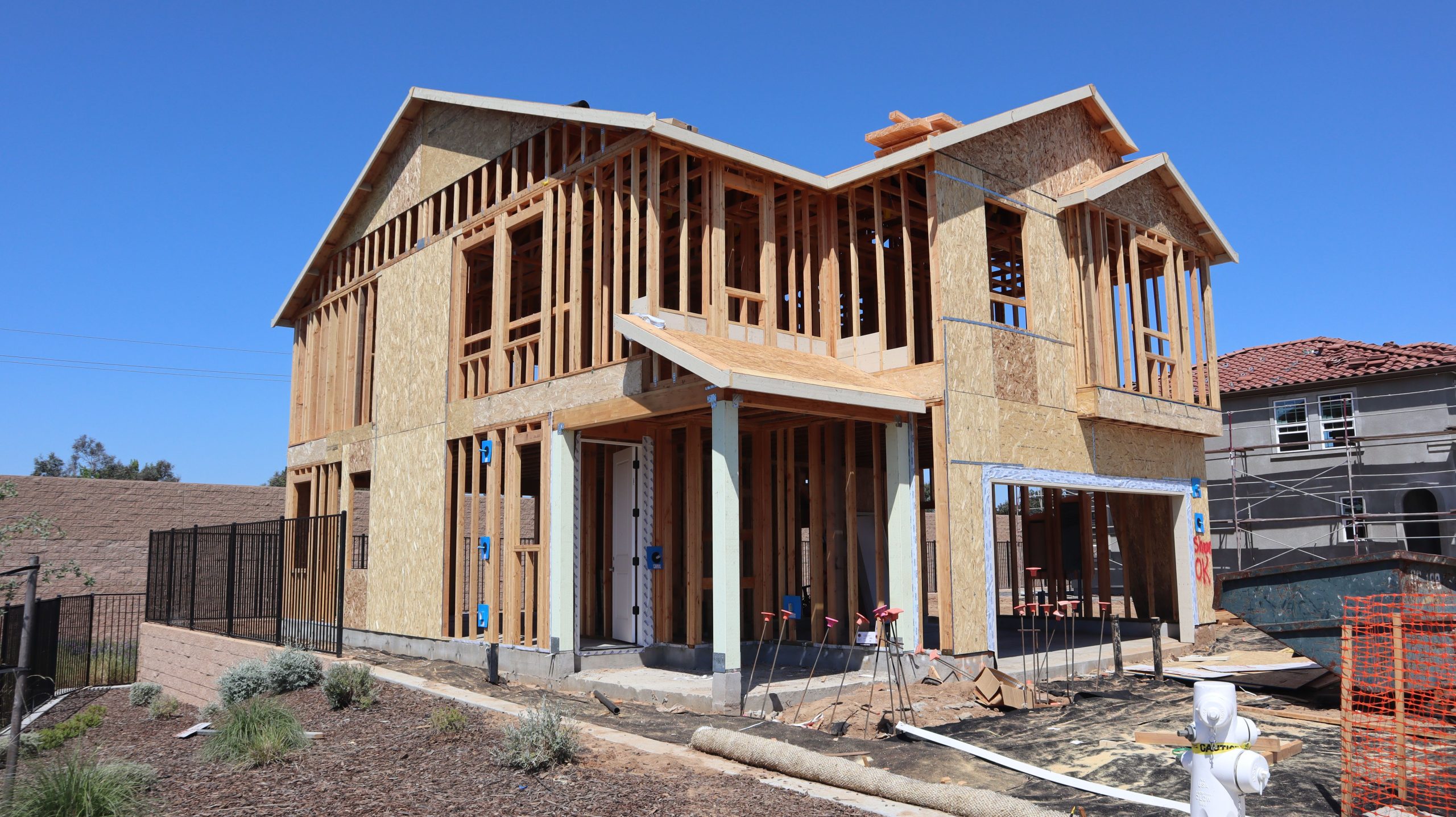
Construction timelines can change because of weather, material availability, inspections and other factors. If the sale of one home needs to coordinate with the completion of another, building some flexibility into your timeline can make the transition much easier to manage.
It’s also worth remembering that a brand-new community is still becoming a neighborhood. Landscaping will mature, additional homes may still be under construction, amenities may be completed in phases, and the community may look and feel quite different a few years from now. That isn’t necessarily good or bad—it’s simply part of buying in a developing neighborhood.
And there are plenty of reasons new construction can be appealing. You get a modern floor plan, newer technology and energy-efficient features, and the opportunity to choose finishes that reflect your taste from the very beginning. There’s something special about walking through the door knowing you’re the first person to call the house home.
“New” doesn’t necessarily mean there’s less to do.
Take the time to understand what’s included, what isn’t, what your finished home will actually cost and how the construction timeline fits with your plans.
Then you can move forward with fewer surprises—and more time to enjoy your new home and your new community.