

 Facebook
 X
X
 Pinterest
 Copy Link
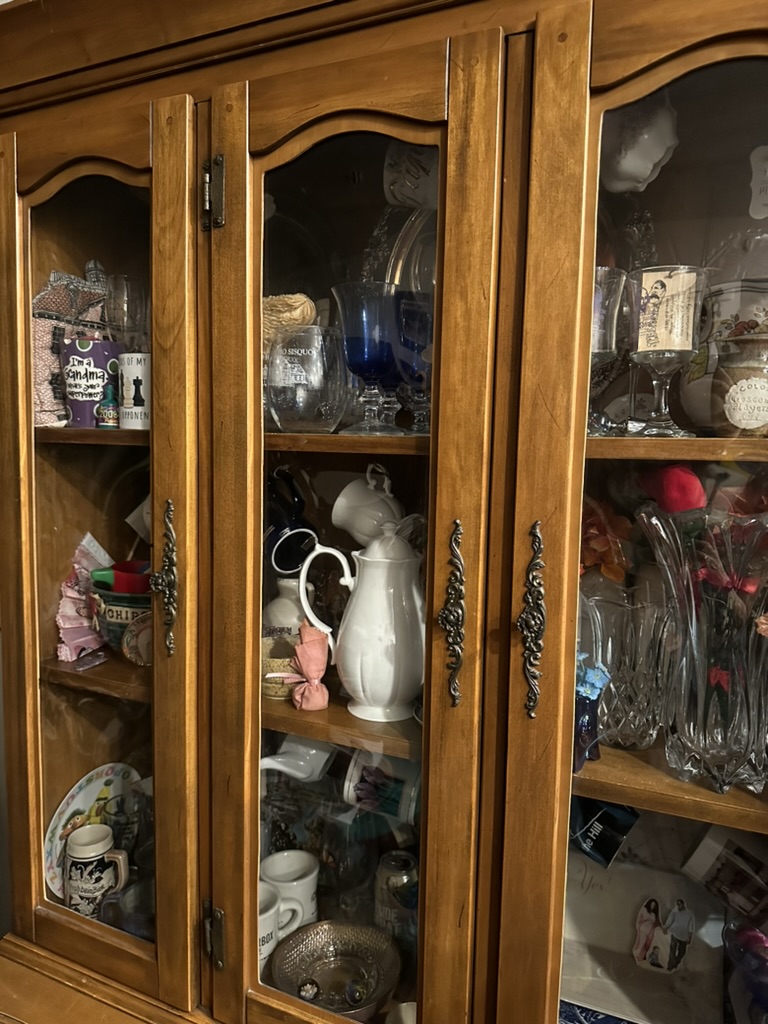
When you’re thinking about right-sizing, deciding where you want to live may actually be the easy part.
Then you look around your home and think, What am I going to do with all this stuff?
For some people, the answer comes fairly easily. For others, a home filled with decades of belongings-and the memories attached to them-can make this one of the most challenging parts of a transition.
Before anything can be sold, donated, gifted, or discarded, there’s an important first step:
What do you actually want to keep?
It’s Not Always Just “Stuff”
Parting with belongings isn’t always a practical decision.
A chair may be just a chair to someone else, but to you it may be where your father sat every Thanksgiving. A set of dishes might rarely leave the cabinet, but perhaps they belonged to your mother or grandmother. A box you haven’t opened in years may still hold pieces of a time in your life that mattered.
The emotional value of our belongings doesn’t necessarily match their financial-or even practical-value.
That’s what can make deciding what stays and what goes so difficult.
There’s no rule that says you have to move quickly through these decisions. Some things will be easy. Others may take a little more time.
And that’s okay.
You Don’t Have to Do It the Same Way as Everyone Else
Some people are ready to jump in. They have the motivation, time, and energy to work through their home one room at a time.
If that’s you, great.
Other people take one look at everything and aren’t quite sure where to begin. Or they start with good intentions, only to discover that making decision after decision becomes exhausting.
That’s okay too.
The important thing is finding an approach that works for you.
You might decide to work one-on-one with a professional organizer. Having someone alongside you can provide structure, keep things moving, and help you work through the process without making the decisions for you.
Another option is a right-sizing group. There’s something encouraging about sharing the experience with people who are navigating many of the same decisions. You can celebrate victories, talk about challenges, and exchange ideas. Something that’s working for another person might be exactly the idea you needed-and something you’ve discovered may help someone else.
Choose Your Assistants Thoughtfully
Family and friends can also be wonderful resources, but this is one area where choosing the right assistant really matters.
The person who’s perfect for helping you pack boxes may not be the person you want beside you while you’re deciding what to do with meaningful belongings.
Look for someone who can listen, be patient, and remember that these are your decisions.
A well-meaning person who has strong opinions about what you “should” keep, sell, or throw away can unintentionally make an already emotional process more difficult.
Sometimes a professional organizer or another experienced person is simply a better fit. If you choose that route, look for someone you connect with and feel comfortable around. You’ll be making some very personal decisions together, and that relationship matters.
Keep, Gift, Donate, Sell-or Let It Go
Once you’ve decided what will come with you, the next step is figuring out what happens to everything else.
And there are plenty of options.
You may want to pass meaningful pieces along to children, grandchildren, other family members, or friends. You may find organizations that would welcome donated items. Some belongings may be worth selling. And yes, there will probably be some things that simply need to go in the trash.
It doesn’t all have to happen the same way.
What About an Estate Sale?
If you have items you’d like to sell, there are several ways to approach it.
You can hold a traditional sale yourself. That generally means sorting, pricing, tagging, advertising, setting everything up, managing the sale, and then deciding what happens to anything that doesn’t sell.
Another option is to hire an estate sale company to manage the process for you, typically in exchange for a percentage of the proceeds.
Online estate auctions are another possibility. Depending on the company and the items involved, an estate sale team may photograph and organize your belongings into small lots, post them online, manage the auction, and coordinate the pickup process. Having buyers collect their purchases during a scheduled pickup period can also mean less disruption in your home.
Each approach has advantages and disadvantages. The right choice depends on what you have, how much time you have, what your goals are, and how involved you want to be.
It’s a Process, Not a Race
Perhaps the most important thing to remember is that there isn’t one “right” way to go through a lifetime of belongings.
You don’t have to make every decision in a weekend.
You don’t have to keep something simply because you’ve owned it for 40 years. And you don’t have to get rid of something meaningful just because someone else doesn’t understand why it matters to you.
Start where you can. Ask for help when you need it. Give yourself permission to change your mind.
Little by little, the question changes from “What am I going to do with all this stuff?” to something much more manageable:
“What do I want to bring with me into what’s next?”
If you live in Ventura County and are interested in a group to support you through this process, contact me to find out about our next scheduled “Creating Space” Group. We run them several times a year. It may be just the connection you’re looking for to sort through your “stuff”!
